
Nine in Ten Commercial Roofs Are Still Empty. Here Is What That Means for Your Business
New research shows over 90% of suitable UK commercial roofs have no solar. What the findings mean for warehouses, hotels and manufacturers in 2026.

Last week, the UK property industry published one of the clearest pictures yet of where commercial solar stands. The headline is striking: fewer than one in ten suitable commercial roofs in the UK has solar panels on it.
At the same time, businesses are facing another winter of high electricity prices, and more than 120 organisations have written to the government asking for help with the cost of power ahead of the Autumn Budget on 28 October.
Put those two stories side by side and the message for anyone running a distribution centre, hotel or manufacturing site is simple. The roof above your head is probably one of the most underused assets you own.
What the new research found
The report, From Opportunity to Infrastructure: Scaling Rooftop Solar in Commercial Real Estate, was commissioned by Real Estate:UK (the industry body formed from the merger of the BPF, AREF and IPF) with Forsters and Push Power, and written by Cushman & Wakefield. It draws on data from 70 property organisations that between them manage more than £500 billion of assets.
- Less than 10% of suitable commercial roof space has solar. That amounts to roughly 3 to 5GW installed today.
- More than 60GW of capacity is sitting unused. The authors compare this to the generating capacity of almost 20 Hinkley Point C nuclear power stations.
- Industrial and logistics buildings have the biggest untapped potential. Large, flat or low-pitch roofs with heavy daytime electricity use are exactly what solar suits best.
- The financial case is strong. For a typical 300kWp system costing around £250,000, the report models a first-year net yield of 20% and a payback of about five and a half years where the occupier funds it. Where the landlord funds it, the modelled yield is 12% with an eight-year payback. Either way, the system saves around 53 tonnes of CO2e a year.
- Appetite is growing. 85% of the property professionals surveyed expect solar generation on commercial buildings to rise over the next two years.
So why are most roofs still empty?
The report is clear that the problem is not the economics of the panels. It points instead to a set of practical barriers:
- Commercial leases that do not line up with what funders need
- Uncertainty over tax rules for property investment trusts
- Inconsistent insurance requirements, which can see projects shrunk or abandoned at design stage
- Grid capacity limits and long connection waits
- Unclear or inconsistent commercial arrangements, including power purchase agreements
- Planning thresholds that push larger systems into a longer approval process
It sets out seven recommendations for government, including standardised lease clauses and PPAs, consistent insurance standards, better export payments, faster grid reform, long-term clarity on Minimum Energy Efficiency Standards, and a higher permitted development threshold.
The energy price backdrop
Wholesale gas prices have climbed again following the conflict in the Middle East, and businesses are feeling it. The coalition letter to the Chancellor, coordinated by Energy UK and the think tank E3G, argues that moving policy levies off electricity bills could cut business power costs by up to 20%.
Whether or not that happens in October, a large share of a business electricity bill is made up of charges that have nothing to do with the energy itself: network costs, capacity charges, the Climate Change Levy and others. Every unit you generate and use on site avoids not just the wholesale price but those charges too. That is why self-consumption, rather than export, is where commercial solar earns its keep.
What this means if you run a warehouse, hotel or factory
- Distribution centres and warehouses have the roof area, the daytime load from lighting, conveyors, chillers and increasingly electric forklifts and vans, and usually a straightforward roof structure. They are the sector the report singles out.
- Hotels run kitchens, laundries, air handling and lighting from early morning to late evening, all year round. Solar paired with battery storage can shift daytime generation into the evening peak.
- Manufacturers often have the highest and most predictable daytime demand of all, which means a very high proportion of solar output is used on site and the payback is quicker.
Where projects actually get stuck, and how to avoid it
In our experience, most commercial solar projects that stall do so for reasons that could have been caught early:
- Structure. Can the roof take the extra load, including wind loading? We engage a structural engineer on every job and do not rely on guesswork.
- Roof condition. Panels last 25 years or more. If the roof covering has ten years left, that needs addressing first, not after installation.
- Asbestos. Many older industrial buildings contain it. We check the asbestos register before design is finalised and arrange further surveys where needed.
- Grid connection. Larger systems need a G99 application to the local network operator, which can take months. Starting early and designing around export limits where necessary keeps the programme moving.
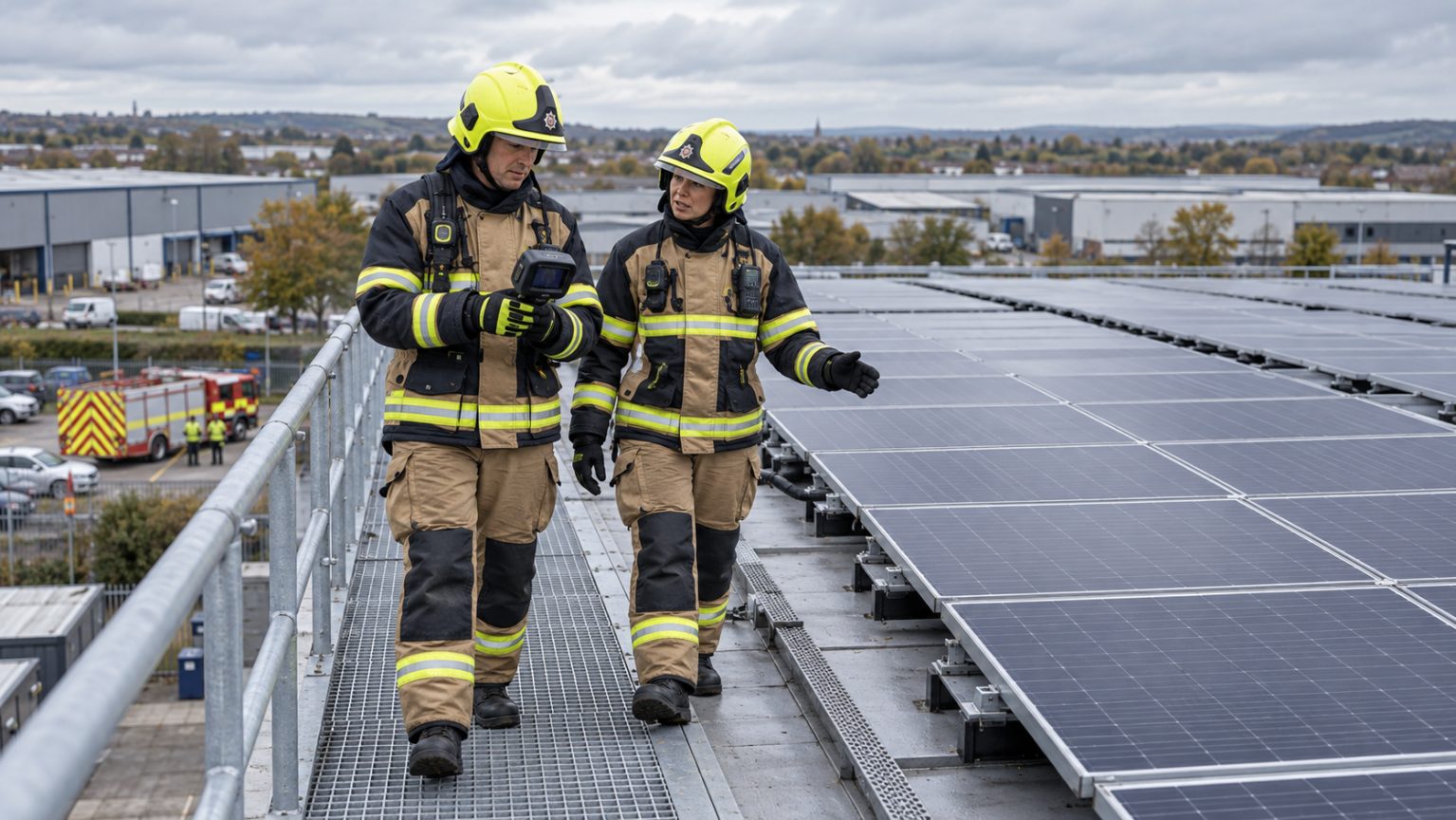
- Insurance and fire safety. Insurers are asking harder questions about rooftop PV. Good design, correct component selection and clear documentation make those conversations far easier.
- Safe installation and future maintenance. Work at height on a live commercial site needs proper planning under CDM 2015. We also look at how the system will be safely maintained for the next 25 years, and build that into the design.
See our guides to roof suitability, commercial solar costs and PPA vs buying outright.
How Moralis Group can help
Moralis Group delivers commercial rooftop solar from the first site survey through design, installation and handover. Because our solar and our health, safety and CDM expertise sit in the same team, the questions that usually slow projects down are dealt with at the start rather than halfway through.
We act as Principal Contractor on every project we deliver. That means one accountable team managing your contractors, your site safety and your documentation, with a clear handover including your health and safety file, warranties and maintenance information.
If you have a large roof and a significant electricity bill, now is a good time to find out what it could be worth.

Get Started
Find Out What Your Roof Could Be Worth
Book a free site survey and we’ll show you the system size, savings and payback for your building.